
MTD for Income Tax Extends to £20,000 from April 2028
Spring Statement 2025 lowered the MTD mandation threshold to £20,000 — adding roughly 970,000 sole traders and landlords from 6 April 2028. Who is affected and how to prepare.
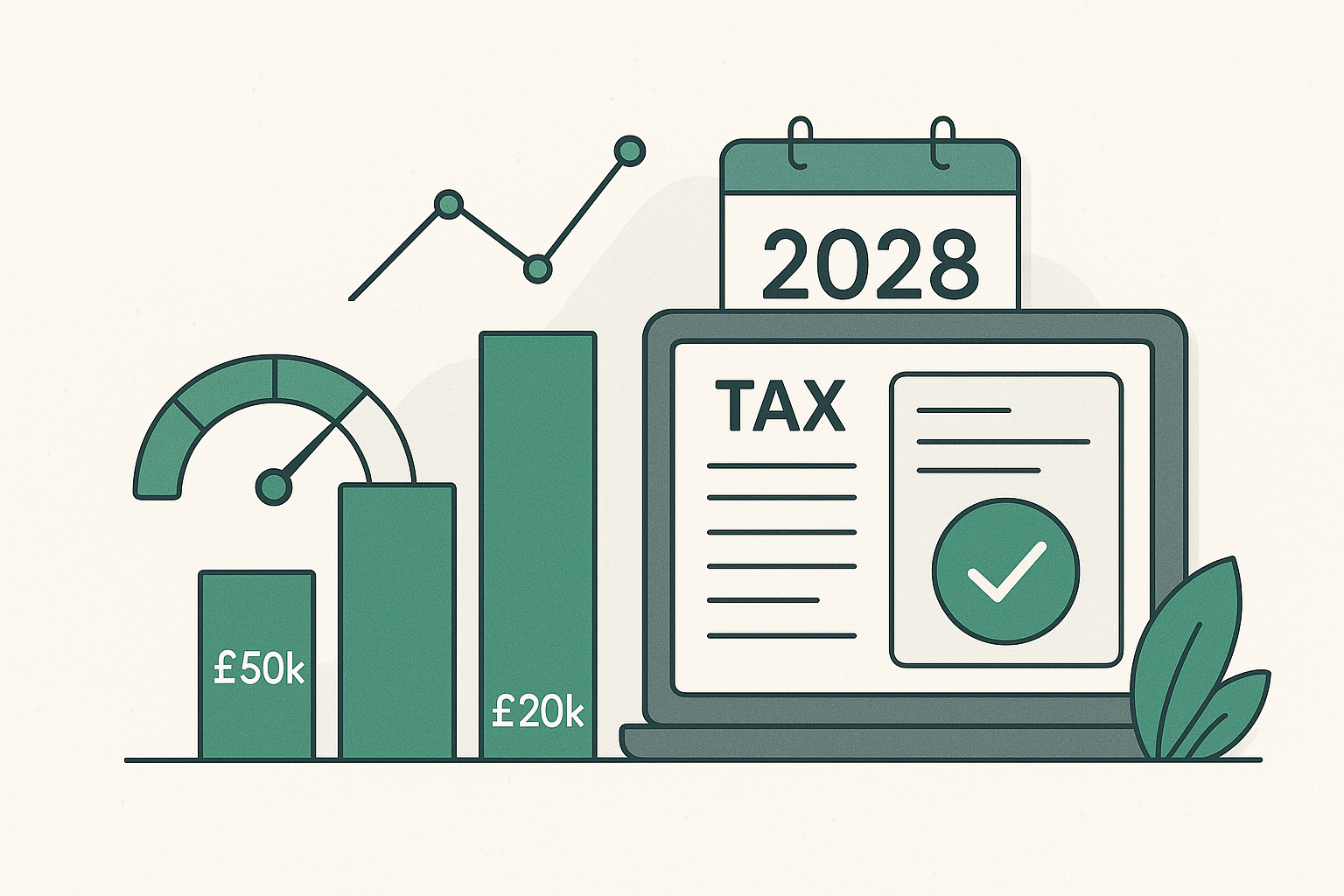
Making Tax Digital for Income Tax Self Assessment (MTD ITSA) already applies from 6 April 2026 for sole traders and landlords with qualifying income over £50,000. A further phase announced at Spring Statement 2025 extends mandation to those earning over £20,000 from 6 April 2028 — bringing an estimated 970,000 additional taxpayers into digital quarterly reporting.
If your combined self-employment and UK property income sits between £20,000 and £30,000, you have roughly two years after the £30,000 cohort joins in April 2027. Use that runway to digitise records now rather than scrambling when HMRC's threshold catches lower-earning side businesses and single-property landlords.
How the phased rollout now looks
April 2026: qualifying income over £50,000 in 2024–25. April 2027: over £30,000 in 2025–26. April 2028: over £20,000 in 2026–27. HMRC uses gross income before expenses for threshold tests — a landlord with £22,000 rent and minimal costs is in scope even if taxable profit is lower after finance costs and repairs.
Employment, dividends, savings interest, and foreign property income do not count toward the MTD ITSA mandation threshold (though they may still appear on your year-end declaration). Multiple trades and properties are aggregated — two small side gigs combining above £20,000 trigger mandation.
Partnerships follow a separate MTD timeline; this £20,000 change targets unincorporated sole traders and UK residential/commercial landlords filing Self Assessment.
What £20,000 earners must do
The same MTD ITSA obligations apply: digital records in compatible software, four quarterly updates summarising income and expenses, and a final declaration replacing the traditional SA100 for in-scope business income. Deadlines follow the month-end-plus-five-day pattern each quarter, with tax payment still due by 31 January after the tax year.
Penalty points apply for late quarterly submissions once grace periods end — the 2026–27 cohort received a first-year exemption from quarterly penalty points, but later joiners should assume full enforcement from their second year in MTD.
Exemptions remain for digital exclusion (with HMRC approval), some ministers of religion, insolvency situations, and individuals without a National Insurance number — check GOV.UK rather than assuming you are out of scope.
Why HMRC lowered the threshold
HMRC's policy costing estimates transitional compliance costs for the £20,000–£30,000 band at roughly £170 per business, with ongoing digital record-keeping costs thereafter. The government argues earlier visibility of income reduces the tax gap and simplifies year-end reconciliation when software holds quarterly data already.
Building on MTD for VAT — now familiar to most VAT-registered businesses — the extension assumes software markets and agent capacity scale downmarket. Critics note micro-landlords and hobby traders face disproportionate burden; HMRC counters that commercial software and free bridging tools lower entry cost.
For FinnAccountings users already on MTD for VAT, extending the same ledger to income tax is largely a configuration step — bank feeds, categorisation rules, and agent reminders reuse the same dataset.
Practical preparation for 2028
If you are near £20,000 today, model growth — crossing the threshold in 2026–27 pulls you in for 2028–29 regardless of whether you barely exceed £20,000 or earn £45,000. Seasonal businesses should use full-year totals, not quiet-month snapshots.
Separate business and personal transactions now. Open a dedicated account for rent collection or freelance income — quarterly updates are painful when every line needs splitting from household spending.
Choose MTD-compatible software before mandation, not the week before Q1 is due. Test a full quarter voluntarily if you join MTD in 2026 or 2027 at higher thresholds — you will understand the workflow before penalties bite.
FinnAccountings and your MTD timeline
FinnAccountings supports MTD ITSA quarterly updates, digital record-keeping from UK bank feeds, and Compliance Agent reminders aligned to HMRC's published deadline table. Whether you are filing Q1 before August 2026 or planning ahead for the £20,000 expansion, the same platform scales with your income band.
Start a free trial, connect accounts, and ask the AI assistant where you sit against current and future thresholds — answers use your categorised income, not generic £50,000 headlines from 2024 announcements.
Sources & references
This article draws on official guidance and publications from the sources below.
- 1.Making Tax Digital for Income Tax Self Assessment
GOV.UK · Accessed 2026-06-26
- 2.Spring Statement 2025 — policy costings (MTD extension)
HM Treasury · Accessed 2026-06-26
Put this into practice
FinnAccountings helps with bookkeeping, tax, and VAT prep for Ireland and the UK — with Chartered Accountant insight on AI drafts. Educational articles are not filing advice.
Try AI accounting free