
UK–India Double Contributions Convention: NICs Rules from 15 July 2026
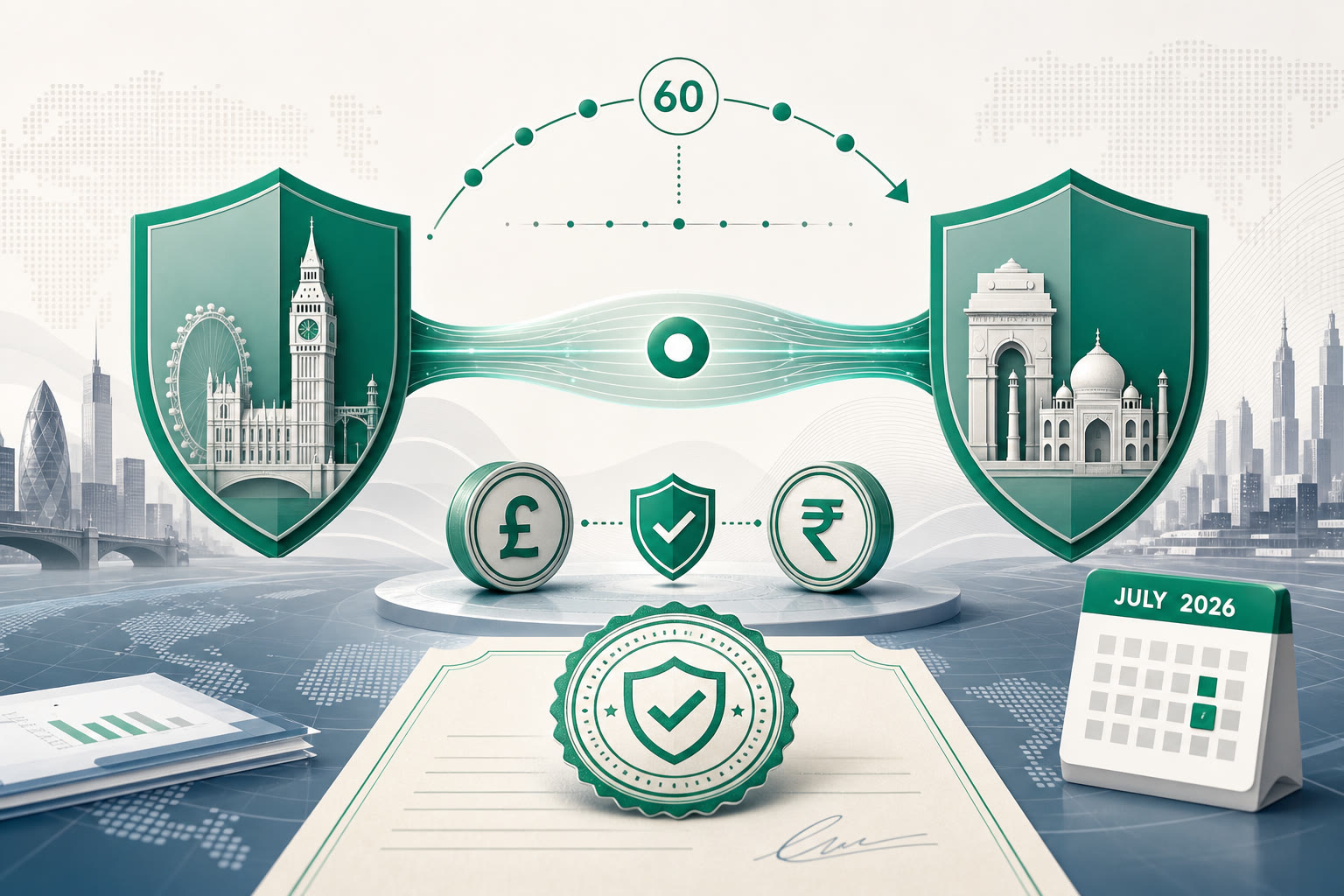
The UK–India Double Contributions Convention entered force on 15 July 2026 — detached workers can stay in their home social security scheme for up to 60 months, while employees already on assignment face different transitional treatment.
The UK–India National Insurance Double Contributions Convention (DCC) entered into force on 15 July 2026. HMRC’s GOV.UK guidance and Agent Update issue 145 confirm the core aim: workers moving between the UK and India — and their employers — should normally pay social security contributions in only one country at a time.
Generally, contributions are due where the work takes place, regardless of residence or where the employer is based. The agreement is a contributions-only social security arrangement (sometimes called a Double Contributions Convention). HMRC’s National Insurance Manual notes that the DCC does not apply to self-employment.
Detached workers and the 60-month home-scheme rule
Employees sent temporarily to the other country on or after 15 July 2026 can remain subject to their home social security legislation if the assignment is not expected to exceed 60 months. UK employees sent to India in that position continue to pay UK Class 1 National Insurance; Indian employees sent to the UK continue under Indian social security and do not pay UK NICs for that detached period.
Where UK NICs continue while working in India, apply to HMRC for a certificate of coverage on form CA9107 as evidence that Indian social security is not also due. Indian detached workers in the UK should obtain a certificate from India’s Employees’ Provident Fund Organisation (EPFO).
Secondary legislation later increased the detached-worker period in the agreement from 36 to 60 months. Always check the current NIM India pages and GOV.UK DCC guidance before relying on a specific duration.
Employees already on assignment on 15 July 2026
Transitional treatment is different for people already mid-assignment when the DCC began. Indian employees already working in the UK immediately before 15 July 2026 (part-way through a domestic 52-week UK NIC exemption) are not treated as detached workers under the DCC — they become subject to UK social security from 15 July 2026 and may owe UK NICs.
UK employees already working in India and paying UK Class 1 NICs immediately before 15 July 2026 likewise are not detached workers under the DCC. They become subject to Indian social security from that date; UK Class 1 liability ceases, and they generally cannot pay UK voluntary NICs for that period of work in India.
UK host employers with Indian-employer staff on site should review CWG2 and secondary Class 1 obligations. Employees already paying UK voluntary NICs while subject to Indian legislation under the DCC should stop those voluntary payments and tell HMRC about the change of circumstances.
Practical checklist for employers and mobile staff
Map every UK↔India assignment against start date, expected length, employer entity, and whether the individual was already abroad on 15 July 2026. Request certificates of coverage early — payroll cannot assume the home scheme applies without evidence.
Update secondment letters and benefits policies for aircrew (home-base rules) and seafarers (flag/residence/payor rules) where those categories apply. Government and armed-forces employees follow dedicated home-legislation rules under the DCC.
Self-employed contractors are outside the DCC. Cross-border self-employment still needs separate advice on where contributions and income tax arise — do not assume employee detached-worker relief applies.
Records still matter for tax prep
Assignment changes often sit beside UK Self Assessment, PAYE, or Irish payroll filings. FinnAccountings helps Ireland and UK businesses organise bookkeeping and tax prep drafts with Chartered Accountant insight before you or your qualified adviser reviews filings. Start a free trial for review-ready packs — we prepare drafts; we do not file NICs certificates or payroll returns with HMRC or Revenue on your behalf.
Related reading
See our briefing on voluntary Class 2 NICs abroad ending from 6 April 2026 and the tax adviser registration deadline (first MMTAR window closes 18 August 2026). Use the free tax calculator for high-level planning estimates only.
Sources & references
This article draws on official guidance and publications from the sources below.
- 1.UK and India: new social security agreement
HM Revenue & Customs · Accessed 2026-08-03
- 2.UK–India Double Contributions Convention (DCC) explainer
HM Government · Accessed 2026-08-03
- 3.NIM33251 — Special Cases: India — Introduction
HM Revenue & Customs · Accessed 2026-08-03
- 4.Issue 145 of Agent Update — UK — India Double Contributions Convention
HM Revenue & Customs · Accessed 2026-08-03
Put this into practice
FinnAccountings helps with bookkeeping, tax, and VAT prep for Ireland and the UK — with Chartered Accountant insight on AI drafts. Educational articles are not filing advice.
Try AI accounting free